

The Future of Automotive: Essential Vehicles Arriving Between 2026 and 2030
The automotive landscape is shifting at an unprecedented rate. As we navigate the transition from internal combustion to electrification, the coming years promise a wave of innovation that will redefine what we expect from our vehicles. From hyper-efficient city commuters to high-performance electric supercars and rugged off-roaders, the period between 2026 and 2030 is set to deliver some of the most exciting and significant models in automotive history.
At the forefront of this revolution are established giants like Audi, BMW, and Porsche, who are pouring billions into next-generation platforms that will underpin a diverse range of electric vehicles. Yet, it’s not just the legacy automakers making waves. Newer players and revitalized brands, such as Genesis, Polestar, and Scout Motors, are injecting fresh energy into the market with audacious designs and cutting-edge technology. This article serves as an indispensable guide to the most anticipated vehicles gracing our roads in the latter half of this decade, offering a comprehensive look at the engineering, design philosophy, and market positioning of each groundbreaking model.
The Electric Dawn: Premium EVs Reshaping the Luxury Segment
The most profound transformation in the automotive industry is the relentless march of electrification. Automakers are no longer offering EVs as niche products; they are foundational to their future strategies. This transition is characterized by significant advancements in battery technology, resulting in longer ranges, faster charging, and more sophisticated performance dynamics.
The 2028 Audi TT EV represents a pivotal moment for the brand. Following the retirement of the iconic TT sports car and the R8 supercar, Audi is pivoting towards a high-tech electric future. Based on the radical Concept C design study, the new TT EV will embody a bold new design language for Audi, characterized by futuristic lighting elements and minimalist, clean surfacing. Critically, it will share its advanced EV architecture with the upcoming Porsche 718 electric models, ensuring that performance remains a core tenet of the experience. Buyers will be able to choose between a rear-wheel-drive single-motor setup or a more potent all-wheel-drive dual-motor configuration. Anticipated to launch around 2027, this model is expected to command a premium price point, likely approaching the $100,000 mark, signaling its positioning as a halo product for Audi’s electric era.
BMW is also undergoing a significant metamorphosis with its 2026 3-Series and M3. Previewed by the Vision Neue Klasse concept, the next generation of BMW’s quintessential sports sedan will embrace a dual-powertrain strategy. While internal combustion variants will persist, the spotlight is firmly on the i3, the all-electric version that will ride on an entirely new EV platform. This platform will feature an 800-volt architecture, enabling ultra-fast DC charging capabilities. The performance flagship, the iM3, is poised to be a technological tour de force, potentially equipped with a quad-motor setup for unprecedented torque vectoring and all-wheel-drive control. The i3 is expected to debut in 2026, with the M3 variant following in 2027, continuing BMW’s legacy of blending luxury with driving exhilaration.
Further cementing the shift towards electric performance is the 2027 Ferrari Luce EV. For a marque that has long championed the visceral experience of the naturally aspirated V-12 engine, this represents a significant strategic pivot. While Ferrari intends to keep its V-12 engines alive for as long as regulations permit, the Luce EV is designed to capture a new generation of buyers seeking sustainable high performance. This low-slung electric crossover will be capable of seating at least four occupants and will feature an in-house developed powertrain, including the battery and motors, ensuring that Ferrari retains complete control over the driving dynamics. With an anticipated starting price well exceeding $500,000, the Luce EV will be an ultra-exclusive offering. Ferrari is expected to pull the wraps off this groundbreaking model in early 2026.
High-Performance Electrified Sports Cars: The Future of Driving Thrills
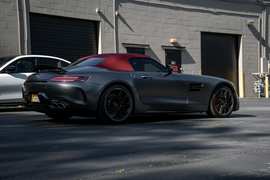
While SUVs and sedans dominate sales charts, the heart of the performance car world is experiencing an electrifying renaissance. Carmakers are proving that electric powertrains can deliver driving experiences that are not just comparable to, but in some ways superior to, traditional internal combustion engines.
The 2029 Lexus LFA concept has ignited the imagination of enthusiasts worldwide. Lexus previously signaled its intent with the Electrified Sport concept and solidified those plans with the LFA concept in 2025. This new model will utilize the same advanced aluminum platform as the Toyota GR GT, but with a bespoke electric powertrain. Lexus has posited remarkable performance targets, including a 0-60 mph sprint in the low 2.0-second range and a cruising range exceeding 430 miles, thanks to the integration of solid-state battery technology. Furthermore, Lexus has hinted at the possibility of a simulated manual transmission, offering enthusiasts a tactile connection to the driving experience that is often lost in the smooth delivery of electric power.
Porsche’s commitment to electrification extends to its mid-engine sports cars. The 2027 Porsche 718 Boxster and Cayman EV will see the iconic duo transition to battery power. Building on the success of the Taycan sedan and the Macan EV SUV, Porsche is applying its formidable engineering prowess to its most agile platforms. The EV versions are expected to retain the balanced chassis dynamics that have made the Boxster and Cayman legends in the automotive world. Perhaps most excitingly, Porsche promises a dynamic soundtrack to accompany the exhilarating acceleration, ensuring that the emotional connection between driver and machine remains intact.
In a bold move to capture the imagination of performance enthusiasts, Toyota is set to launch the GR GT, the first standalone model under its Gazoo Racing (GR) performance banner. Originally rumored to wear a Lexus badge, this mid-engined supercar will feature a twin-turbocharged 4.0-liter V-8 engine paired with a transaxle that also houses an electric motor. This hybrid setup is projected to produce a staggering 641 horsepower and 627 pound-feet of torque, enabling a claimed top speed of 199 mph. Weighing in at a surprisingly light 3,858 pounds, the GR GT promises razor-sharp handling. With an expected starting price of around $300,000, this Toyota is positioned as a serious contender in the supercar arena, with sales slated to begin in late 2027.
American Muscle Reinvented: The Electrification of Detroit’s Icons
The traditional bastions of American automotive performance—Dodge, Chevrolet, and Ram—are undergoing their own dramatic transformations. The rumble of the Hemi V-8 is being echoed, and in some cases replaced, by the high-tech whine of electric motors, but the focus on brute force and straight-line speed remains.
The 2027 Dodge Charger Hellcat V-8 represents a compelling narrative of continuity and change. Just as the Hemi engine made a triumphant return to the Ram 1500 pickup, Dodge is reintroducing the V-8 to the Charger lineup, acknowledging that the electric Daytona variant has not fully captured the hearts of the brand’s devoted fanbase. The V-8 is expected to be available in multiple displacements, including the 5.7-liter, 6.4-liter, and the legendary supercharged 6.2-liter Hellcat. Power figures are anticipated to remain in the same stratospheric territory, with the Hellcat variant easily surpassing 700 horsepower. The return of the Hemi to the Charger is slated for 2026, promising a thrilling juxtaposition of old-school muscle and modern engineering.
Chevrolet is also expanding its performance portfolio. The highly anticipated 2026 Chevy Corvette SUV is set to redefine the Corvette subbrand. While official details remain under wraps, industry insiders expect this model to utilize GM’s Alpha platform, lending it a sophisticated, rear-wheel-drive-biased chassis. Engine options are anticipated to span the spectrum, from an efficient turbocharged four-cylinder on the entry level to a supercharged 6.2-liter V-8 for the top-tier Z0-something performance model. This marks a bold expansion for the Corvette nameplate, moving it beyond the traditional two-seat sports car format.
Meanwhile, the electric performance revolution is in full swing at the Stellantis group. The 2026 Ford Mustang Dark Horse SC emerges as a successor to the legendary Shelby GT500, slotting between the standard 500-hp Dark Horse and the track-focused GTD. This high-powered bruiser packs a supercharged 5.2-liter V-8, the same potent engine found in the GTD. While Ford has yet to release official power figures, estimates place the output close to 800 horsepower. Ford has also meticulously honed the suspension for track duty and upgraded the aerodynamics to generate additional downforce. Deliveries of this track-ready Mustang are scheduled to commence in the summer of 2026.

Adding to the electrifying mix is the 2026 Ford Mustang Raptor. Inspired by the off-road antics of the Porsche 911 Dakar and Lamborghini Sterrato, Ford is preparing to unleash a Raptor version of its iconic pony car. This audacious concept is expected to feature a naturally aspirated V-8 engine, all-wheel drive, and a lifted suspension system equipped with advanced Fox Live Valve dampers. This limited-run, unorthodox take on the Mustang is projected to arrive in