
The 2026 Automotive Market Forecast: Navigating Trade Friction, Electrification Pains, and the Digital Revolution
The global automotive landscape is undergoing a seismic shift, driven by escalating trade tensions, the uneven rise of electric vehicles (EVs), and the accelerating integration of digital technologies. As an industry veteran with a decade of experience navigating the ebb and flow of market dynamics, I’ve witnessed firsthand how quickly consumer preferences and regulatory frameworks can reshape the competitive terrain. The year 2026 promises to be a watershed moment, forcing Original Equipment Manufacturers (OEMs) to confront unprecedented supply chain bottlenecks, volatile consumer demand, and the strategic imperative of reinvention.
The foundational research from S&P Global Mobility’s 2026 Automotive Analyst Outlook provides a granular, data-driven lens through which to view these monumental challenges. It confirms what many of us in the trenches have suspected: the era of straightforward, predictable growth is over. We are now in an era defined by strategic agility, technological diversification, and a ruthless focus on profitability. The following analysis delves into the critical inflection points shaping the industry, offering a roadmap for survival and success in this new, complex reality.

Global Production Reels Under Trade Uncertainty and Shifting Demand
Global light-vehicle production is projected to experience a slight contraction in 2026. This downward pressure is primarily a direct consequence of the escalating trade friction, particularly the imposition of US automotive tariffs, which are chilling consumer appetite in North America. The market experienced a pre-tariff buying surge in 2025, pulling demand forward and leaving a weaker, more saturated market in its wake. This dynamic serves as a stark reminder of the profound impact automotive market trends in trade policy can have on production volumes and regional competitiveness.
Meanwhile, China, the world’s largest automotive market, is heading into a contractionary phase after a period of stimulus-fueled expansion. As government incentives wane and tax policies tighten, domestic demand is faltering. This slowdown has significant ripple effects for European automakers, who are facing not only subdued demand within the EU but also mounting pressure from an influx of highly competitive Chinese imports. The resulting squeeze on margins is forcing a painful reassessment of production strategies across the continent.
The plight of Japanese and South Korean manufacturers is equally precarious. Caught between the dual threats of US tariffs and intensifying global competition, these established players are finding their traditional export models increasingly untenable. In stark contrast, South America and South Asia are emerging as relative bright spots. Supported by more favorable local policies and limited exposure to the disruptive US trade measures, these regions are poised for modest, yet significant, growth. For OEMs seeking diversification, these emerging markets represent critical strategic opportunities.
The Electrification Conundrum: Supply Chains Strain, Profits Suffer
The transition to electric mobility, while inevitable, is far from the seamless, linear progression many envisioned. Automotive market trends in electrification are being dictated by a complex interplay of affordability constraints, policy uncertainty, and inadequate charging infrastructure. In Europe, the financial strain on suppliers is reaching a breaking point, accelerating a wave of consolidation across the entire automotive production network. This consolidation is a necessary, albeit painful, response to the intense price competition and the need for greater economies of scale.
Battery leadership remains firmly entrenched in China’s grasp, spearheaded by behemoths like CATL. However, even this dominance is being tested. The industry is grappling with significant excess capacity and growing pressure to pivot toward next-generation battery technologies. Incremental improvements in Lithium Iron Phosphate (LFP) technology are effectively pushing sodium-ion batteries out of the mass-market conversation until after 2031, as the performance gap in cost-per-kWh remains too wide to overcome. Solid-state batteries, the supposed panacea for range and safety concerns, continue to languish in the development phase, plagued by persistent technical hurdles and evolving battery materials supply chain issues.
Despite these challenges, charging infrastructure is improving, driven by the proliferation of wireless charging solutions and the standardization around the North American Charging Standard (NACS). However, a critical chokepoint has emerged: China’s near-monopoly over the extraction and processing of rare earth elements. This dependency represents a significant battery materials supply chain risk that could derail even the most ambitious electrification plans if not proactively managed.
Perhaps the most telling indicator of the industry’s strategic recalibration is the renewed emphasis on hybrids and range-extended EVs, particularly in China. This pragmatic turn signals a departure from the EV-or-bust mentality of previous years. Automakers and suppliers are now focused on optimizing the mix of electrified powertrains, recognizing that a balanced approach, tailored to regional infrastructure and consumer readiness, offers the most sustainable path to profitability. These shifts are central to understanding the current automotive market trends in electrification.
Digital Transformation: From Cost Center to Revenue Engine
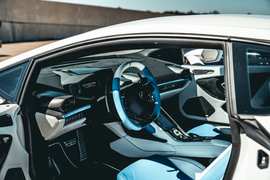
The concept of the automotive digital transformation is rapidly evolving from a buzzword into a tangible revenue-generating force. At the forefront of this revolution are advanced human-machine interfaces (HMIs). Unified dashboards, panoramic multi-screen layouts, and augmented reality head-up displays are no longer novelties reserved for concept cars; they are rapidly becoming standard equipment, fundamentally altering the in-car experience.
Generative AI is making its way from the data center to the cockpit, as OEMs deploy increasingly sophisticated voice assistants and infotainment systems to drive deep personalization. By 2031, we project that an estimated 28 million vehicles will feature GenAI-powered chatbots, transforming the in-car experience from a passive interface to an interactive, intelligent co-pilot.
Beyond the user interface, the rise of software-defined vehicles (SDVs) is reshaping automaker economics entirely. The ability to deliver high-margin revenue through connected vehicle services, advanced driver-assistance systems (ADAS), and over-the-air (OTA) upgrades sold via subscription models is unlocking unprecedented profit pools. This shift represents a fundamental change in the automotive value chain, moving beyond the traditional model of selling hardware to a continuous engagement model built on software and services.
However, monetization is far from guaranteed. Success in this new paradigm requires a clear connected vehicle services strategy, effective trial models to drive consumer uptake, and the ability to sustain rapid innovation—whether built in-house or through strategic partnerships with technology players. The winners will be those who master the complexities of the software stack and the nuances of the subscription economy. These developments are redefining automotive market trends in connected vehicle services.
Chassis and Materials: A Quiet Revolution in Performance and Production
The evolution of vehicle chassis and materials is proceeding with less fanfare than the EV transition, but its impact on vehicle performance, manufacturing efficiency, and cost structure is equally profound. By-wire systems—electrically controlled steering and braking—are gaining significant traction, particularly in premium vehicles like the Tesla Cybertruck and the Mercedes-Benz EQS. The anticipated debut of electro-mechanical brakes in North America and China in 2026, with wider adoption expected by 2028, marks a pivotal moment in this transition. While established suppliers currently dominate this space, Chinese competitors are rapidly closing the technology gap, especially in the European market, posing a significant competitive threat to incumbents.
Concurrently, materials science is driving a paradigm shift in vehicle design. The industry is moving inexorably toward lighter, safer, and more sustainable platforms. The increased use of hot-stamped and ultra-high-strength steels is enabling greater component integration and meaningful weight reduction, crucial for improving EV range and overall efficiency.
The true disruption, however, is coming from China. Chinese firms are emerging as global leaders in magnesium thixomolding, a manufacturing process that offers unprecedented flexibility and allows for the creation of complex, integrated components in a single step. This innovation significantly reduces tooling costs and accelerates time-to-market. Furthermore, carbon-fiber composites continue to gain traction, supported by advances in bio-based resins and materials that simultaneously improve performance and enhance sustainability credentials.
The Looming Semiconductor Shortage: A Critical Risk to Production
One of the most alarming developments on the horizon is the looming automotive semiconductor shortage. The insatiable demand from AI data centers is overwhelming the global supply of Dynamic Random-Access Memory (DRAM). This market dynamic is forcing chipmakers to prioritize higher-margin customers, leaving the automotive sector scrambling for supply. The potential consequences are dire: an automotive-grade DRAM price spike of 70–100% in 2026 could trigger panic buying and widespread production disruptions across the industry.
Compounding this crisis is the fact that legacy memory chips, the workhorses of the automotive industry, are slated to be phased out by 2028. This leaves automakers with a rapidly narrowing window to redesign their electronic architectures and lock in long-term supply agreements. In this environment, agile sourcing strategies and deep, collaborative supplier partnerships are no longer optional; they are absolutely critical for survival. The automotive supply chain challenges presented by this automotive semiconductor shortage could prove to be the defining bottleneck of the decade.
Interiors and Lighting: Raising the Bar on In-Car Experience
In response to the sophisticated demands of the digital-native consumer, vehicle interiors are moving resolutely upmarket. Automakers are doubling down on comfort, technology, and premium materials to differentiate their offerings. Soft-touch surfaces and next-generation infotainment controls are becoming standard features, while motorized and heated seats continue to proliferate, particularly in the Chinese market where consumer expectations for luxury and convenience are exceptionally high.

Design differentiation is intensifying, with a focus on features that enhance the perception of space and technological sophistication. Sunroofs and smart glass are gaining traction, offering panoramic views and customizable opacity. In the realm of lighting