



The Abrupt Halt of Afeela: A Deep Dive into the Challenges of Next-Gen EV Development
As a seasoned observer of the automotive industry with a decade entrenched in its intricate shifts, few recent developments have resonated as loudly as the announced cancellation of the Afeela 1 electric sedan. This was not just another product withdrawal; it signaled a profound recalibration of strategic priorities within a high-profile joint venture between two titans, Sony and Honda. The project, birthed from ambitious visions of a software-defined, entertainment-rich electric vehicle, promised to redefine the driving experience. Its abrupt discontinuation, however, offers a stark lesson in the realities of the rapidly evolving electric vehicle market, highlighting the immense hurdles in EV development, manufacturing, and consumer adoption.
The announcement from Sony Honda Mobility (SHM) to cease development on the Afeela 1 electric sedan and its planned SUV sibling in March 2026 sent ripples throughout the industry. Coming hot on the heels of Honda’s broader decision to scale back its own dedicated EV manufacturing plans in the United States, the writing was perhaps on the wall. For those of us tracking automotive technology trends, it underscored the volatile nature of electric vehicle investment and the complex calculus required to bring a truly competitive, next-generation EV to market.
The Genesis: A Vision of Synergy and Software-Defined Mobility
The partnership between Sony and Honda, formalized as Sony Honda Mobility, was initially heralded as a potent blend of technological innovation and automotive engineering prowess. Sony, a global leader in consumer electronics, entertainment, and sensing technology, brought to the table a vision for a highly connected, immersive in-car experience. Honda, a storied automotive giant, offered its deep expertise in vehicle design, safety, manufacturing scale, and global distribution. The synergy seemed compelling: an industry-leading tech firm meeting a revered automaker to create a revolutionary electric vehicle.
The initial reveal of the Afeela prototype at CES 2023 captivated audiences, promising a vehicle that was less about traditional automotive metrics and more about its digital ecosystem. The focus was heavily placed on advanced driver-assistance systems (ADAS), sophisticated infotainment integration, and the concept of a “software-defined vehicle” – a platform that could evolve and personalize over time. The Afeela 1 electric sedan was envisioned not merely as transportation, but as a mobile entertainment hub and a seamless extension of one’s digital life.
Further details at CES 2025 solidified the product’s direction, with the official production specification hinting at a mid-2026 launch, initially targeting discerning consumers in tech-forward regions like California’s EV market. This geographic focus, alongside the vehicle’s premium pricing structure, clearly positioned the Afeela 1 electric sedan within the luxury EV market and the burgeoning premium EV segment. Expectations were high for a groundbreaking product that could truly challenge established players and newcomers alike.
The Unraveling: Honda’s Strategic Pivot and Its Ripple Effect
The primary catalyst for the Afeela project’s demise was a strategic pivot by Honda itself. Earlier in March 2026, Honda announced it was cancelling plans to build three dedicated EVs in the United States on an all-new platform. This was a significant reversal, indicating a reassessment of its standalone EV development strategy and the financial viability of its ambitious electrification roadmap.
From an industry perspective, Honda’s decision likely stemmed from a confluence of factors:
Mounting EV Manufacturing Costs: Building a dedicated EV platform from scratch is incredibly capital-intensive. The scale required to achieve profitability is immense, and new platforms come with significant R&D burdens.
Intense Competition: The electric vehicle market is becoming increasingly saturated, with new models emerging constantly across all segments. Established automakers are pouring billions into electrification, while nimble startups continue to innovate. This makes carving out a profitable niche incredibly challenging.
Supply Chain Challenges: The global automotive supply chain, particularly for critical EV components like batteries and semiconductors, remains volatile. Securing reliable and cost-effective access to these materials can make or break an EV development program.
Slower-Than-Expected Consumer Adoption in Certain Segments: While overall EV sales are growing, the pace and specifics of consumer preference can shift. Honda might have re-evaluated the market readiness for its planned EV lineup, especially against the backdrop of fluctuating fuel prices and charging infrastructure availability.
Profitability Pressures: Many automakers are currently losing money on their EV programs. The pursuit of electrification is a long-term play, but immediate financial performance remains critical, especially for publicly traded companies.
Honda’s retraction meant that Sony Honda Mobility could no longer rely on “certain technologies and assets” that were originally slated to be provided by the automotive partner. This fundamental shift effectively removed the foundational support structure for the Afeela 1 electric sedan. Without Honda’s integral engineering, production infrastructure (such as the originally planned Ohio factory for US manufacturing), and supply chain leverage, SHM determined it lacked a “viable path forward” to bring the models to market as initially envisioned.
Analyzing the Afeela 1’s Market Positioning: A Critical Look
Even before the cancellation, the Afeela 1 electric sedan faced an uphill battle in the fiercely competitive premium EV segment. Let’s objectively assess its proposed market positioning:
Pricing Strategy: The projected starting price of $89,900 for the base Origin trim and $102,900 for the Signature trim placed the Afeela squarely against segment leaders like the Tesla Model S, Mercedes EQS, Porsche Taycan, and Lucid Air. These vehicles not only boast established brand prestige but also offer compelling performance and range figures. For a newcomer, even with the Sony/Honda backing, justifying such a premium price without an established track record or overwhelming advantages was always going to be tough.
Performance and Range: The proposed dual-motor powertrain, delivering over 400 horsepower, was respectable but not groundbreaking for a vehicle in this price bracket. Similarly, an estimated range of around 300 miles, while adequate for many, felt middling against rivals that often exceed 350 or even 400 miles on a single charge. In the luxury EV market, range anxiety is a diminishing concern, but superior range remains a significant differentiator and selling point. The Afeela 1, while technically capable, didn’t appear to offer a compelling performance or range proposition to warrant its price tag.
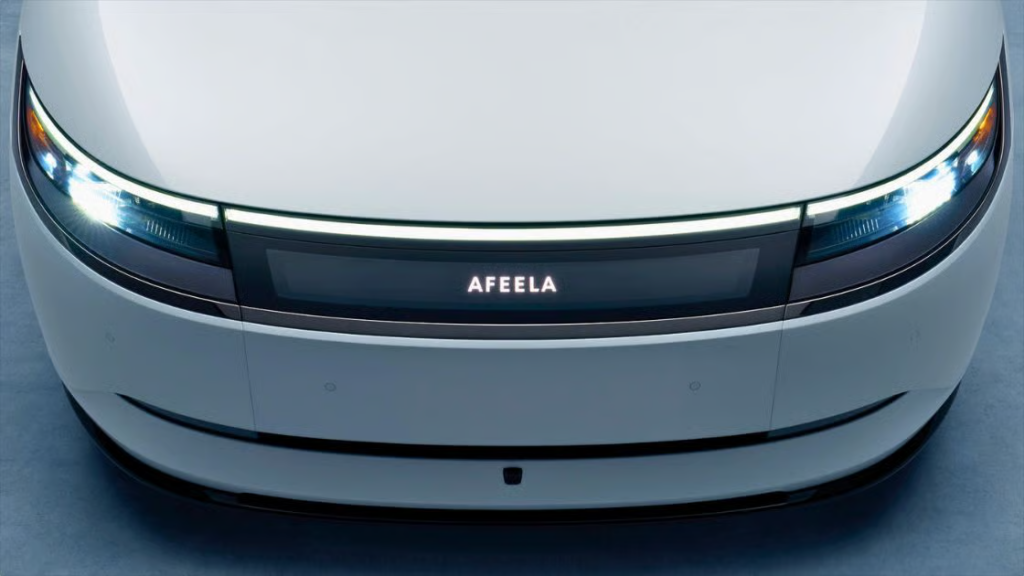
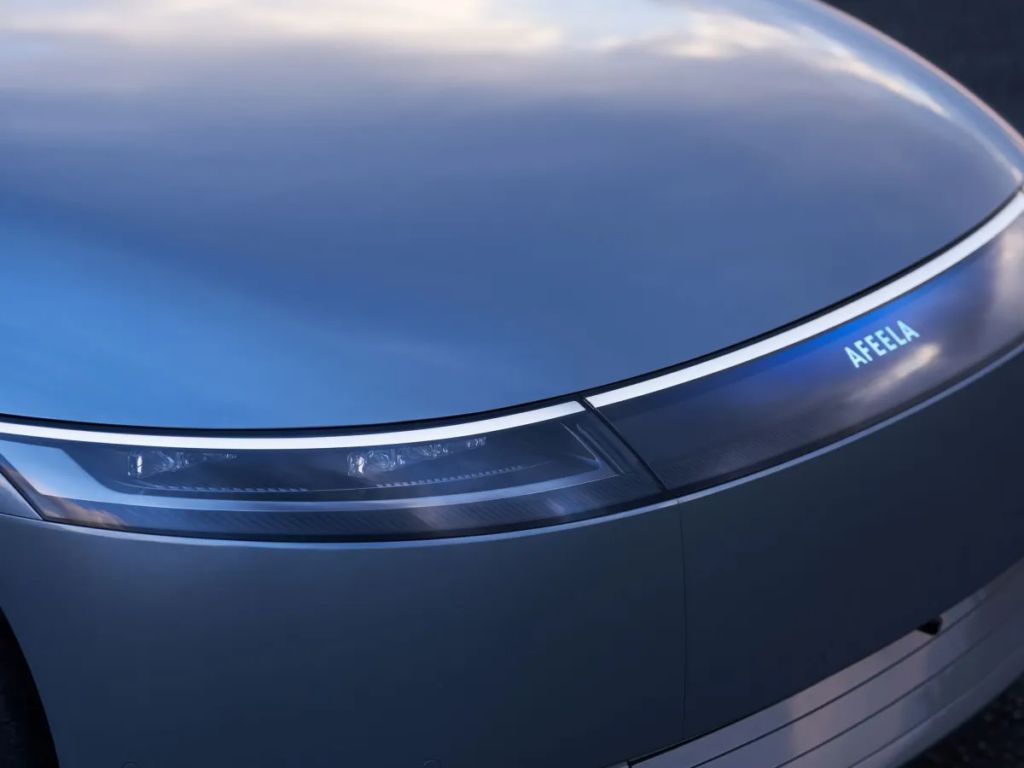
Design and Aesthetics: Subjectivity plays a huge role in design, but the Afeela 1’s styling was often described as understated, even bland. While its focus was undoubtedly on the digital experience, exterior aesthetics remain paramount in attracting consumers to premium vehicles. In a segment where vehicles like the Hyundai Ioniq 5 or Porsche Taycan command attention with bold or iconic designs, the Afeela 1 electric sedan struggled to stand out visually. This perception that it looked “designed to be in the background of a video game” may have undermined its ability to capture the aspirational desires of luxury car buyers.
Technology Differentiation: Sony Honda Mobility heavily leaned on the Afeela 1’s advanced infotainment system, powerful onboard computer, and sophisticated autonomous driving technology aspirations. While the concept of software-defined vehicles is indeed the future of mobility, and robust ADAS features are expected, the market is rapidly catching up. Other automakers are investing heavily in these areas, and without truly revolutionary, proprietary, and proven features, simply “having” good tech might not be enough to move the needle, especially if the core automotive propositions (performance, range, design) are merely adequate.
Broader Industry Context and Lessons Learned
The cancellation of the Afeela 1 electric sedan serves as a potent case study for the broader automotive industry and tech companies eyeing entry into mobility.
The Peril of Automotive Joint Ventures: While joint ventures can pool resources and expertise, they are inherently complex. Differing corporate cultures, shifting strategic priorities of parent companies, and the immense capital requirements of EV development can create fissures. The Afeela project highlights how a change in one partner’s overarching strategy can quickly doom the collaborative effort, even one as well-funded as SHM.
The Reality of EV Manufacturing Costs: Building EVs profitably is a monumental challenge. The initial investment in dedicated platforms, gigafactories for EV battery technology, and retooling existing facilities runs into the tens of billions. Many traditional OEMs are facing the “innovator’s dilemma,” needing to invest heavily in EVs while still relying on internal combustion engine (ICE) profits. This delicate balancing act, coupled with the high upfront EV manufacturing costs, makes market entry particularly arduous for new players, or even for seasoned OEMs venturing into new segments with fresh brands.
Evolving Consumer Expectations for Next-Gen EVs: Consumers today expect more than just an electric powertrain. They demand seamless connectivity, intuitive user interfaces, robust charging infrastructure solutions, competitive pricing, and compelling designs. The market has matured beyond early adopters who might overlook certain compromises. The EV market forecast suggests continued growth, but also increasing scrutiny from mainstream buyers who demand value and reliability.
The Software-Defined Vehicle Revolution is Hard: While Sony’s expertise in software and entertainment was a key selling point, integrating this seamlessly into a complex automotive platform, ensuring safety, cybersecurity, and regulatory compliance, is a different beast entirely. Automakers are still grappling with becoming “software companies,” and the road is fraught with technical and operational challenges. The Afeela 1 project was ambitious in this regard, but perhaps underestimated the sheer difficulty of marrying these two disparate worlds effectively and at scale.
The Importance of Supply Chain Resilience: Access to critical materials, particularly those for EV battery technology, remains a strategic imperative. Geopolitical tensions, resource scarcity, and logistical bottlenecks can severely impact production schedules and costs. Any EV development plan today must include a robust and diversified supply chain strategy.
What Does the Future Hold for Sony and Honda?
While the immediate outlook for Sony Honda Mobility producing a vehicle like the Afeela 1 electric sedan appears dim, the company did state it “will continue discussions with Sony and Honda regarding its future business plans.” This suggests that the venture itself might not be entirely dissolved, but rather re-evaluated for alternative avenues.
For Sony, its automotive ambitions are likely undeterred. The company has invested heavily in automotive sensors, infotainment systems, and software solutions. It’s plausible that Sony might pivot its strategy to become a premier technology supplier to the automotive industry, leveraging its expertise to power other automakers’ next-gen EVs. This could be a less capital-intensive and less risky approach than directly entering vehicle manufacturing.
Honda, on the other hand, is clearly recalibrating its global EV strategy. This might involve focusing on partnerships with established EV leaders (as seen with its previous collaborations) or refining its internal EV architecture to be more cost-effective and scalable. Its emphasis could shift towards electrifying existing popular models or developing more accessible, mainstream EVs rather than high-end niche products like the Afeela 1 electric sedan. The cancellation reinforces the idea that even major automakers are finding the path to full electrification a winding and challenging one, requiring constant re-evaluation and adaptation to market realities. The lessons learned from the Afeela project will undoubtedly inform Honda’s future decisions regarding sustainable mobility and its long-term electrification goals within the US electric vehicle market and beyond.
Conclusion: A Signpost in a Transformative Era
The premature end of the Afeela 1 electric sedan project is more than just a footnote in automotive history; it’s a critical signpost for the industry. It underscores the immense complexity, financial risks, and strategic agility required to succeed in the electric vehicle market. Even with the combined might of Sony’s technological prowess and Honda’s manufacturing experience, the road to EV development is fraught with challenges. From the relentless pace of automotive technology trends to the ever-present pressure of EV manufacturing costs, every aspect demands meticulous planning and flawless execution.
The dream of a seamlessly integrated, software-defined electric vehicle remains the future of mobility. However, the journey to realize this future is proving far more arduous and unforgiving than many initially anticipated. The Afeela saga is a sobering reminder that innovation must always be tempered by market realities, competitive pressures, and a clear, sustainable business model.
If you’re navigating the complexities of the evolving automotive landscape or considering your next move in the electric vehicle market, understanding these intricate dynamics is crucial. We invite you to explore further insights and strategies to thrive in this transformative era. Connect with us to delve deeper into EV market forecasts, sustainable automotive solutions, and the strategic imperatives shaping the next-gen EVs.