
From Private Vault to Public Icon: Inside the $1.5 Billion Hypercar Collection Now Open to the World
For decades, the ultra-wealthy have guarded their automotive treasures behind high-security gates and climate-controlled concrete walls. We are talking about the kind of hypercar collection that is usually glimpsed only by a select inner circle of collectors, private brokers, and high-net-worth investors. But in a move that has sent ripples of excitement through the automotive world, German industrialist Friedhelm Loh has shattered the mold. By opening his $1.5 billion automotive archive to the public, he hasn’t just built a museum; he has curated a masterclass in mechanical engineering and history that is finally accessible to the enthusiast.

In an era where digital assets often dominate headlines, there is something profoundly grounding about seeing a hypercar collection of this magnitude in the metal. Located in Dietzhölztal, just an hour outside of Frankfurt, the Nationales Auto Museum—better known as the Loh Collection—is arguably the most significant automotive unveiling of the decade. For those of us who have spent years tracking high-end auctions and private sales, the sheer breadth of this assembly is nothing short of breathtaking.
The Vision Behind the $1.5 Billion Hypercar Collection
Friedhelm Loh, the man behind the Friedhelm Loh Group, built his empire on the backbone of industrial technology and global manufacturing. With over 12,500 employees and a footprint spanning 90 subsidiaries, Loh’s wealth provided the resources to chase down some of the most elusive machines ever built. However, unlike many who treat cars as static alternative asset investments, Loh treated his acquisitions as historical artifacts.
By 2023, the collection—which had grown to over 130 world-class vehicles—outgrew its private confines. Rather than parceling it off to the highest bidder or keeping it locked away in a private hangar, Loh chose to revitalize an old industrial foundry, blending the brutalist charm of German manufacturing history with the sleek, aerodynamic lines of modern performance engineering. The result is a sanctuary for gearheads that bridges the gap between the dawn of the automobile and the bleeding edge of the hypercar market.
Masterpieces of Engineering: What Defines This Collection?
When you step into this space, you aren’t just looking at shiny paint and leather; you are looking at the evolution of human speed. The collection features over 50 manufacturers, offering a historical timeline that is as diverse as it is deep.
The Pioneers
The journey begins with the 1895 Benz Viktoria. It is a humble, delicate machine by modern standards, yet it represents the foundational DNA of every high-performance vehicle in the building. It is a masterclass in provenance, preserved in its original condition—a stark reminder that long before the hypercar market exploded, it was inventors like Benz who dared to challenge the horse and carriage.
The Icons of Performance
Moving through the timeline, the museum showcases a breathtaking array of legends. You’ll find the Mercedes-Benz 300SL Gullwing, a car that needs no introduction in the world of classic luxury, sitting alongside machines that represent the apex of 20th-century design.
For many, the crown jewel remains the Maybach Exelero. This isn’t just a car; it is a statement of excess. Originally designed as a testbed for high-performance tires, it features a 5.9-liter twin-turbocharged V12 engine that delivers staggering performance. Seeing it in person offers a rare opportunity to appreciate the sheer scale and audacity of its design—a design that has inspired countless modern-day automotive projects.
Why This Matters for Automotive Enthusiasts
The hypercar collection is more than just a list of expensive models. It is an exploration of the “chase.” Among the crowd-pleasers is the legendary Audi R8 that conquered the 24 Hours of Le Mans. It is a rare piece of sporting history, standing as the only Le Mans-winning R8 outside of Audi’s own factory collection. For anyone interested in the intersection of automotive investment strategy and racing history, this exhibit provides an unfiltered look at what it takes to compete at the highest level of motorsport.
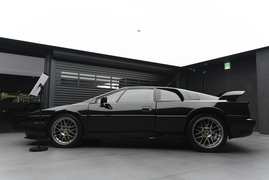
The presence of the Ferrari F1-2000 also highlights the transition of the collection from simple “car storage” to a professional archive. Each piece tells a story of technological competition—whether it’s the pursuit of an extra 50 horsepower or a slight reduction in drag coefficient.
The Economics of Hypercar Collecting
From an investment perspective, this museum is a fascinating case study. High-net-worth individuals have long used the hypercar market as a hedge against inflation and a way to diversify portfolios. When you consider that a single significant classic Ferrari or a limited-run Bugatti can appreciate by seven figures in under a decade, you begin to understand the financial gravity of the $1.5 billion figure attached to the Loh collection.
However, Loh’s decision to open this to the public suggests a shift in how we view these assets. By democratizing access—charging a modest entry fee of roughly $30—he is positioning these cars as cultural heritage rather than just high-yield luxury assets. This strategy provides a unique opportunity for enthusiasts to witness the physical reality of the hypercar market without needing a seat at a private auction house in Monaco or Scottsdale.
Planning Your Visit to the Loh Collection
If you find yourself in the vicinity of Frankfurt, this is a pilgrimage that should be at the top of your list. The juxtaposition of the historic industrial architecture of the foundry with the polished, high-tech surfaces of the modern hypercars creates an atmosphere that is truly visceral.
Whether you are an aspiring collector looking to understand the mechanics of the hypercar market, or simply a fan of automotive art, the Nationales Auto Museum offers an experience that is impossible to replicate on a screen. You are not just observing history; you are standing in the middle of it.
Beyond the Metal
What makes this collection stand out from other private displays is the curation. It doesn’t just show you the fastest car; it shows you the why. It explains the engineering challenges, the racing victories, and the industrial context behind every design choice. It is a rare glimpse into the mind of a billionaire who truly understands the soul of the machine.
Conclusion: The New Standard for Automotive Museums
Friedhelm Loh has done more than just open a garage; he has set a new gold standard for how the world’s elite automotive collections should be shared. In a world where privacy and exclusivity are often valued above all else, this bold move to bring the public into the fold is a breath of fresh air.
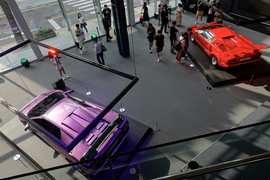
If you are passionate about the evolution of the machine, the history of speed, and the artistry of the automotive form, there has never been a better time to explore the world’s most significant collections. Start your journey by researching the upcoming exhibits at the Nationales Auto Museum and discover for yourself why these machines remain the ultimate symbols of human ingenuity. Don’t just read about the history—go experience it firsthand and secure your tickets to this unparalleled display of automotive mastery today.