
Inside the $1.5 Billion Hypercar Collection: A Masterclass in Automotive Heritage
For those of us who have spent decades covering the automotive beat, the term “private collection” usually evokes images of dusty garages, locked climate-controlled warehouses, and secret handshakes required to catch a glimpse of automotive history. Typically, when a billionaire curates a world-class hypercar collection, those assets remain shrouded in exclusivity, traded privately among ultra-high-net-worth individuals, never to see the light of public scrutiny.
However, the landscape of automotive preservation changed forever when Friedhelm Loh, the German industrialist and billionaire, took an unprecedented step. By opening the Nationales Auto Museum – The Loh Collection to the public, he didn’t just display cars; he effectively democratized access to a $1.5 billion treasure trove. After ten years of following the world’s most significant auctions and private sales, I can safely say this is the most significant shift in how we perceive high-end automotive investment and cultural heritage.
The Evolution of the Hypercar Collection
Friedhelm Loh’s fortune, rooted in his sprawling industrial holding company, allowed him the rare luxury of pursuing a passion project on an institutional scale. What started as a private hobby has transformed into a major cultural landmark located just outside of Frankfurt. In an era where digital assets often overshadow physical craftsmanship, the hypercar collection housed within this revitalized foundry serves as a visceral reminder of what human engineering can achieve.
The museum isn’t just a warehouse; it is a meticulously curated timeline. By choosing to house these 130 rare machines in a repurposed industrial space, Loh has created a juxtaposition that resonates with enthusiasts. It proves that a hypercar collection of this magnitude is not merely about net worth or vanity—it is about the preservation of technological milestones that would otherwise be lost to time.
What Defines a $1.5 Billion Portfolio?
If you are wondering what exactly constitutes a hypercar collection worth $1.5 billion, it’s the breadth of history combined with extreme scarcity. While the term “hypercar” is often tossed around in modern marketing, the reality of high-value automotive investment lies in provenance.
The collection features the 1895 Benz Viktoria—a cornerstone of the industry. Seeing this alongside the Maybach Exelero concept highlights the vast chasm of engineering progress. The Exelero, a vehicle legendary for its 5.9-liter twin-turbocharged V12 engine and its origins as a high-speed tire testing platform, is a centerpiece that few collectors could ever dream of acquiring.
For the modern investor or aficionado, this hypercar collection offers a masterclass in market diversification:
The Rare Classics: Vehicles like the Mercedes 300SL Gullwing represent stable, high-appreciation assets that have weathered every economic cycle.
The Racing Pedigree: The inclusion of an Audi R8 that conquered the 24 Hours of Le Mans is the crown jewel. It remains the only race-winning chassis from that era outside of Audi’s own corporate museum, making it an incredibly high-value asset with immense historical importance.
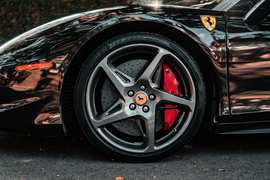
The Modern Icons: From the Bugatti Veyron to various limited-run Ferraris, the hypercar collection spans the golden age of performance engineering.
Investment Perspective: Why the Public Benefit Matters
From a professional standpoint, seeing a hypercar collection of this caliber open to the public provides massive value to the industry. It educates the next generation of engineers, designers, and collectors. In the world of wealth management and luxury asset investment, accessibility often drives interest and, consequently, value.
The $30 entry fee—a trivial sum for the caliber of engineering on display—offers an unmatched return on investment for any car enthusiast. If you are looking to understand why certain vehicles are considered blue-chip assets, studying this hypercar collection is the best crash course you can get. It distinguishes the difference between a mass-produced “sportscar” and a true “hypercar”—a machine that pushed the boundaries of physics at the time of its creation.
Navigating the Future of Automotive Heritage
As we move into 2025 and beyond, the trend of converting private wealth into public museums is gaining traction. Wealthy individuals are increasingly aware that their legacy depends on how they share their success. This hypercar collection provides a template for others to follow. By moving these vehicles from private stasis to public view, the Loh Collection has ensured that these rare cars are not just static objects, but living, breathing testaments to industrial history.
Whether you are an aspiring collector, a high-net-worth individual looking to diversify into tangible assets, or simply a fan of high-performance engineering, visiting this facility is no longer optional—it is essential. You are seeing a $1.5 billion portfolio that defies market volatility, anchored by the most significant engineering breakthroughs of the last 130 years.
Your Next Step in Automotive Exploration
The world of high-end vehicles is more accessible today than it has ever been, but opportunities to witness a hypercar collection of this historical significance remain rare. If you are ready to move from a casual observer to an informed participant in the automotive world, the time to plan your visit to the Nationales Auto Museum is now.

Take the next step in your passion for automotive excellence. Whether you are looking to research specific market trends, understand the provenance of classic racers, or simply experience the pinnacle of human mechanical achievement, we invite you to explore our deeper insights on high-value asset acquisition. Reach out to our expert team today to stay updated on the latest breakthroughs in the luxury automotive market and ensure you are the first to know about upcoming exhibitions that redefine the industry.