
Inside the $1.5 Billion Hypercar Collection Now Open to the Public
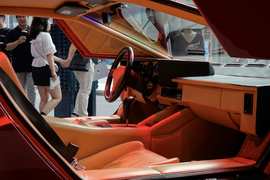
For the better part of a decade, I’ve tracked the movements of elite automotive portfolios. I’ve seen private garages in Dubai and climate-controlled vaults in Switzerland that remain hermetically sealed from the prying eyes of the public. The industry standard has always been exclusivity—the “if you have to ask, you can’t afford it” mentality. That is why the decision by German industrialist Friedhelm Loh to pull back the curtain on his staggering $1.5 billion hypercar collection has sent shockwaves through the automotive world.
In an era where ultra-high-net-worth individuals typically treat their investments as “garage queens” destined for private appreciation, Loh has taken a radical departure. By opening the Nationales Auto Museum – The Loh Collection near Frankfurt, he has essentially democratized access to automotive history, shifting the narrative from private hoarding to public stewardship.
The Architecture of Automotive History
When we discuss the most valuable car collections, we are often talking about a mix of historical artifacts and modern engineering marvels. Loh’s collection is not just a gallery; it is a masterclass in industrial evolution. Located in an expertly revitalized foundry, the museum offers a tactile, immersive environment that balances brutalist industrial architecture with the sleek, aerodynamic lines of the world’s most expensive vehicles.
The facility itself is a destination. If you are planning a trip to Germany to witness these engineering feats, you’ll find that the museum provides a unique perspective on how the hypercar collection serves as a bridge between the 19th-century pioneers and the carbon-fiber titans of 2025.
Defining the $1.5 Billion Experience
So, what exactly does a $1.5 billion investment in automotive heritage look like? It is an eclectic, breathless cross-section of 130 vehicles representing 50 different manufacturers. As a collector, I often advise clients that a true collection requires breadth, and Loh has achieved this by curating a narrative that moves chronologically from the dawn of the automobile to the present day.
The Foundation: The 1895 Benz Viktoria
The anchor of this hypercar collection is, surprisingly, the 1895 Benz Viktoria. It is a vital piece of the puzzle—a reminder that the high-speed dream began with four wheels and a single-cylinder engine. Seeing this preserved in its original, unmolested state allows visitors to understand the lineage of the high-performance monsters that share the floor with it.
The Maybach Exelero: A Masterclass in Excess
One of the crown jewels of the exhibit is the legendary Maybach Exelero. For those who track high-end vehicle market trends, the Exelero remains a mythical beast. Originally commissioned as a tire-testing concept, it is powered by a 5.9-liter twin-turbocharged V12. In the world of high-CPC automotive investments, this car stands as a pinnacle of custom coachbuilding—an asset that is nearly impossible to value given its singular existence.

Motorsport Royalty
For the racing enthusiast, the museum houses machines that have secured their place in history. My personal highlight is the Ferrari F1-2000, a vessel of pure speed that defined a dominant era in Formula 1. Furthermore, the presence of an Audi R8 that conquered the 24 Hours of Le Mans is particularly significant. It is, to my knowledge, the only chassis with that specific pedigree currently sitting outside of Audi’s own corporate archives. This level of provenance is what drives the valuation of a world-class hypercar collection into the billions.
Why This Matters for the Automotive Market
The shift toward public museums is a fascinating trend in 2025. We are seeing more wealthy enthusiasts realize that a car kept in darkness provides no value to culture. When you analyze the Nationales Auto Museum, you are not just looking at a garage; you are looking at a permanent exhibition of human achievement.
From an investment standpoint, the exposure of these cars to the public often increases their visibility and, consequently, their desirability. Whether you are interested in luxury car insurance, high-end vehicle appraisal, or the intricate mechanics of a V12 hypercar, this collection provides the empirical data and visual references that were once reserved for the ultra-elite.
Accessibility and the Future of Collecting
The most refreshing aspect of this endeavor is the price of admission. For a modest fee—approximately $30—the general public gains access to a portfolio valued at $1.5 billion. It is a rare moment of accessibility in a sector often defined by gatekeeping. By prioritizing public engagement, Loh has set a new benchmark for how billionaires should manage their legacy assets.
If you are a collector or a student of engineering, a visit to this museum is no longer just a weekend excursion; it is a professional pilgrimage. You are not simply observing a hypercar collection; you are witnessing the evolution of the internal combustion engine and the aerodynamic breakthroughs that have brought us to the doorstep of the electric age.
Your Next Steps into the World of Supercars
Whether you are a seasoned investor or a passionate enthusiast looking to deepen your understanding of automotive engineering, there is no substitute for experiencing these vehicles in person. The Nationales Auto Museum represents the best of what private capital can do for public appreciation.
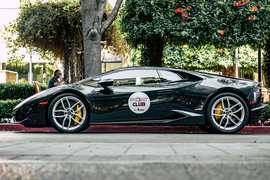
I encourage you to schedule your visit to Frankfurt and walk the halls of this incredible facility. Seeing the craftsmanship of a 19th-century Benz standing alongside a modern-day aerodynamic marvel is an experience that will redefine your appreciation for the art of the automobile. If you are looking to learn more about how to start your own curated assembly of vehicles or need expert guidance on maintaining a portfolio of your own, reach out today to discuss how we can help you navigate the complex, high-stakes market of classic and modern hypercars. The road to the perfect collection begins with a single step—start yours by exploring the history that paved the way.