🔻 WATCH THE VIDEO BELOW 🔻

The Definitive Guide to the Most Powerful Production Cars in the World: 2025 Edition
In the relentless pursuit of automotive perfection, engineers and designers continuously push the boundaries of what’s possible. What was once the exclusive domain of million-dollar hypercars has now trickled down to mainstream production vehicles, blurring the lines between road-legal machines and track-day weapons. Today, drivers in [City/Area, e.g., New York City, Los Angeles, Houston] have access to unprecedented levels of power, technology, and performance that were unthinkable just a decade ago.
This isn’t just about horsepower anymore; it’s a complex interplay of aerodynamics, lightweight materials, advanced drivetrain technology, and digital integration. As we navigate the ever-evolving landscape of the automotive industry in 2025, we’re witnessing a renaissance driven by electrification, sustainability, and raw, unadulterated performance. This comprehensive guide dives deep into the current hierarchy of most powerful production cars, exploring the engineering marvels that define the pinnacle of automotive achievement.
The Evolution of Power: A 2025 Perspective
The automotive world has undergone a seismic shift in the last few years. Traditional metrics of performance—think cubic inches and naturally aspirated engines—are being challenged by a new breed of powertrain. Hybridization and full electrification have emerged not as compromises, but as enablers of extreme performance.
For the average consumer in [City/Area], this evolution means that a $40,000 sedan can now outperform a $200,000 sports car from a generation ago. However, when we talk about the most powerful production cars, we’re looking at the bleeding edge—vehicles that redefine what a road-legal machine is capable of.
The definition of “production car” itself has become a hotly debated topic. In 2025, does a limited-run hypercar with 30 examples count? Does a bespoke coachbuilt vehicle with 10 units qualify? Our criteria for this list focus on vehicles that are series-produced (even if in limited numbers) and available for purchase by the public, rather than one-off concept cars or heavily modified tuner vehicles.
Key Trends Shaping 2025 Performance:
Electrification as a Performance Multiplier: Electric motors now deliver instant torque, allowing hybrid systems to achieve combined outputs that dwarf traditional gasoline engines.
Carbon Fiber Dominance: Lightweight materials are no longer just for hypercars. We’re seeing extensive use of carbon fiber in chassis and bodywork across a wider range of vehicles.
Advanced Aerodynamics: Active aero elements—wings, spoilers, and diffusers that adjust in real-time—are becoming standard on high-performance models.
Software-Defined Vehicles: Over-the-air updates and complex ECU mapping allow manufacturers to extract more performance from existing hardware.
Top Tier: The Hypercar Elite
These are the pinnacles of automotive engineering, where cost is no object and performance knows no limits. These vehicles represent the absolute zenith of what’s currently achievable in a production-ready package.
The Unquestioned Monarch: Bugatti Chiron Super Sport 300+ / Bolide
While the original Veyron 16.4 Super Sport laid the groundwork, the Bugatti Chiron Super Sport 300+ and its track-only sibling, the Bolide, represent the current apex of Bugatti’s engineering prowess.
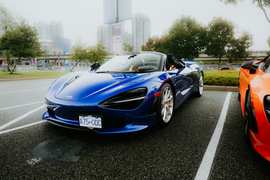
Power Output: Approximately 1,600 horsepower (though some variants are electronically limited for road use).
Engineering Marvel: Bugatti’s legendary 8.0-liter quad-turbocharged W16 engine is a masterpiece of engineering, producing power levels that were once thought impossible.
Production Status: The Super Sport 300+ was a limited run of 30 units, while the Bolide is a track-only variant with even more extreme performance metrics.
Why It Matters: Bugatti has consistently pushed the boundaries of top speed and power, setting benchmarks that other manufacturers can only aspire to. The Chiron lineage remains the gold standard for luxury hypercars.
The Hybrid Titans: Ferrari LaFerrari Successor / McLaren Speedtail
The era of pure gasoline hypercars is waning, replaced by sophisticated hybrid systems that deliver staggering performance with greater efficiency.
Ferrari LaFerrari Successor: While the original LaFerrari was a game-changer, its successor (often referred to in concept phases as the “LaFerrari Aperta” follow-up or new hybrid flagship) continues this legacy. With a combined output expected to exceed 1,000 horsepower, it pairs a high-revving V12 with advanced KERS-style electric assistance. The focus here is on the ultimate driver engagement, combining visceral engine notes with electric torque.
McLaren Speedtail: A spiritual successor to the legendary McLaren F1, the Speedtail is an aerodynamic marvel designed for extreme top speed. Its hybrid powertrain produces around 1,036 horsepower, enabling a top speed exceeding 250 mph. Unlike the LaFerrari, the Speedtail prioritizes aerodynamic efficiency and high-speed stability over outright track performance, featuring a unique three-seat configuration with the driver positioned centrally.
The Lamborghini Aventador Successor (LP780-4 Ultimae Successor)
Lamborghini continues to push the boundaries of naturally aspirated V12 performance, even as it transitions to hybridization.
Power Output: The successor to the Aventador LP780-4 Ultimae pushes the V12 to its absolute limit, with outputs approaching 800 horsepower in its most extreme road-going forms.
Engineering Marvel: Lamborghini’s commitment to naturally aspirated V12 engines is legendary. This powertrain combines screaming high revs with the instant torque of electric motors in its hybrid variants, creating a driving experience that is both visceral and brutally fast.
Production Status: These models are typically produced in highly limited numbers, often as special editions to mark the end of a particular engine generation.
The Mainstream Powerhouses: $100,000 – $200,000 Segment
The gap between hypercars and everyday sports cars has narrowed significantly. In 2025, vehicles in the $100,000 to $200,000 range offer performance that would have been considered exotic just a decade ago. This segment is where automotive innovation truly trickles down to the consumer.
The Porsche 918 Spyder Legacy
While the 918 Spyder itself is no longer in production, its influence on the current Porsche lineup is undeniable. Its hybrid powertrain technology has paved the way for the incredible performance of models like the 911 Turbo S and GT3 RS.
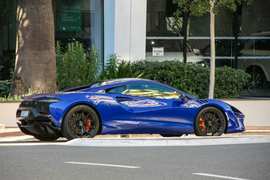
Power Output: Approximately 887 horsepower (for the original 918 Spyder).
Legacy: The 918 Spyder proved that hybrid technology could deliver race-car levels of performance while maintaining relative usability. It set benchmarks for lap times and efficiency that manufacturers are still chasing.
Current Relevance: The lessons learned from the 918 are evident in the latest 911 GT3 RS, which features active aerodynamics and a track-focused chassis that delivers an unparalleled driving experience.
The American Muscle Redefined: Dodge Charger SRT Hellcat Redeye Jailbreak / Challenger SRT Demon
Dodge has redefined the concept of American muscle, proving that raw power and modern technology can coexist.
Power Output: The Charger SRT Hellcat Redeye Jailbreak pushes the envelope with a staggering 807 horsepower from its supercharged 6.2-liter HEMI V8.
Engineering Marvel: This isn’t just about brute force; Dodge has integrated advanced cooling systems, high-performance brakes, and sophisticated traction control to make this power usable on the street. The Redeye Jailbreak variant offers even more customization and performance potential.
Production Status: These models are produced in significant numbers, making them some of the most accessible high-horsepower vehicles on the market. Their success has sparked a new wave of muscle car innovation from competitors.
The Ferrari F12 Berlinetta Successor / 812 Superfast Legacy
Ferrari’s front-engine V12 grand tourers have always represented a blend of comfort and brutal performance. The lineage stemming from the F12 Berlinetta and 812 Superfast continues to dominate this segment.
Power Output: Approaching 800 horsepower in its latest naturally aspirated V12 iterations.
Engineering Marvel: Ferrari’s V12 engines are legendary for their sound, responsiveness, and linear power delivery. In these models, the engine is paired with sophisticated electronics that optimize power delivery for both road and track use.
Why It Matters: These cars represent the last bastion of the naturally aspirated V12 in the mainstream market, offering a driving experience that is increasingly rare in an electrified world.
The Performance Hybrids: Blending Power and Efficiency
Hybrid technology is no longer a compromise; it’s a performance enhancer. These vehicles prove that you don’t have to sacrifice environmental responsibility for exhilarating performance.
The McLaren P1 Successor / Artura
McLaren has fully embraced hybridization, with models like the Artura offering supercar performance with hybrid efficiency.
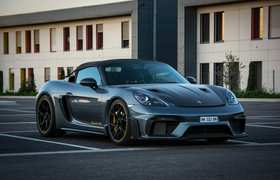
Power Output: The McLaren Artura delivers around 671 horsepower