🔻 WATCH THE VIDEO BELOW 🔻

US
10 OF THE MOST POWERFUL MUSCLE CARS EVER BUILT
The American automotive landscape is currently undergoing a seismic shift, as electric powertrains and efficiency-focused six-cylinder engines begin to supplant the high-displacement V8s that have defined the muscle car era for decades. Stellantis has already discontinued the iconic Dodge Challenger and Charger in their HEMI-powered forms, while Chevrolet is pivoting toward an electrified future for the Camaro. Ford, under CEO Jim Farley’s guidance, remains the last bastion of the traditional muscle car, though even they are exploring hybrid solutions. This transitional period marks a poignant moment to reflect on the zenith of the horsepower wars—the production muscle cars that pushed the boundaries of power, performance, and intimidation.
The following compilation celebrates the titans of this golden age, vehicles that delivered staggering horsepower figures, groundbreaking engineering, and an undeniable cultural impact. These machines represent the pinnacle of internal combustion engineering, offering a blend of raw, brutish power and sophisticated technology that captivated gearheads and redefined the very concept of a street-legal performance car. Prepare to revisit some of the most exhilarating and ferocious muscle cars ever to grace the asphalt.
Ford Mustang Dark Horse — 500 hp
Ford
The latest iteration of the Mustang, particularly in its Dark Horse trim, represents a significant evolution of the seventh-generation model. It takes the foundational updates to the powertrain, interior digitization, and exterior styling and elevates them to a track-ready performance level. While the previous generation’s performance ceiling was capped by the 480-hp Mustang Mach 1, Ford engineers have extracted an additional 20 horsepower from the venerable 5.0-liter Coyote V8 for the Dark Horse.
This power bump to 500 hp and 418 lb-ft of torque is achieved through several strategic enhancements. Drawing inspiration from the now-legendary Shelby GT500, the Dark Horse utilizes the same high-performance piston connecting rods from the previous generation’s supercharged halo car. Furthermore, the Coyote V8 in the Dark Horse benefits from a dual-throttle-body intake system, a design choice aimed at optimizing airflow and combustion efficiency. The results on the track are telling, with independent testing confirming a 0-60 mph sprint in approximately 3.7 seconds and a quarter-mile time of around 12 seconds at 118 mph.
Beyond the engine upgrades, the Mustang Dark Horse is a thoroughly modern performance machine. It features a sophisticated MagneRide suspension system that adapts to changing road conditions in milliseconds, ensuring optimal grip and handling. Power is channeled through a robust Tremec six-speed manual transmission, offering a visceral connection between driver and machine. For those seeking even greater track capability, an optional Handling Package and lightweight carbon fiber wheels further sharpen the car’s dynamic envelope. As one of the few remaining V8-powered muscle cars in production, the Mustang Dark Horse stands as a testament to Ford’s commitment to performance heritage, offering a compelling blend of modern technology and raw power that is increasingly rare in today’s automotive landscape.
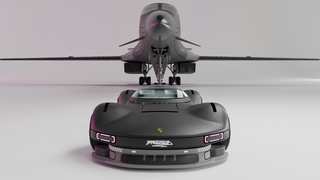
Chevrolet Camaro Z/28 (fifth-generation) — 505 hp
Chevrolet
The swan song of the fifth-generation Chevrolet Camaro arrived in the form of the resurrected Z/28, a nameplate that had lain dormant since 2002. Available exclusively for the 2014 and 2015 model years, the Z/28 eschewed the supercharged brute force of the ZL1 in favor of a naturally aspirated, track-focused approach. It harnessed the formidable 7.0-liter LS7 V8, a derivative of the legendary LS engine family, producing a potent 505 hp and 481 lb-ft of torque. This engine selection was a deliberate nod to Chevrolet’s racing pedigree, prioritizing high-revving, linear power delivery over the low-end grunt of its supercharged siblings.
However, the Z/28’s true genius lay not in its raw horsepower figures, but in its holistic engineering approach to track dominance. Chevrolet engineers stripped away weight wherever possible, installing lightweight components such as a carbon fiber hood, thinner rear glass, and reduced sound-deadening material. The chassis was transformed with the addition of Multimatic Dynamic Suspensions Spool Valve dampers, providing unparalleled body control and damping precision. Grip was maximized through extra-wide Pirelli P Zero Trofeo R tires, race-derived stoppers in the form of Brembo carbon ceramic brakes, and a revised aerodynamic package designed to generate substantial downforce.
The result of this meticulous engineering was a car that redefined the modern muscle car benchmark. While its 4.0-second 0-60 mph time and 12.3-second quarter-mile performance were exceptional, they paled in comparison to the Z/28’s on-track prowess. It was a car that prioritized handling, balance, and driver engagement above all else, earning the prestigious MotorTrend Best Driver’s Car award in 2014. The fifth-generation Z/28 stands as a rare example of a muscle car that prioritized cornering speed over straight-line acceleration, proving that true performance is about more than just horsepower figures.
Chevrolet Camaro ZL1 (sixth-generation) — 650 hp
Chevrolet
Building upon the success of its fifth-generation predecessor, Chevrolet unveiled the sixth-generation Camaro ZL1 in 2017, solidifying its position as the pinnacle of Camaro performance. While the first-generation ZL1 of 1969 was a legendary racing homologation special, the modern iterations have evolved into road-legal supercars capable of humbling European exotics. The sixth-gen ZL1 represents the zenith of this evolution, equipped with Chevrolet’s most potent powertrain to date.
Under the hood lies a supercharged 6.2-liter LT4 V8, an evolution of the already potent LT1 engine found in the standard Camaro SS models. This monstrous V8 produces a staggering 650 hp and an equal measure of 650 lb-ft of torque. This power is delivered through either a lightning-fast 10-speed automatic transmission or a crisp-shifting manual gearbox, both optimized for performance driving. The LT4’s surge of power is immediate and relentless, launching the ZL1 from 0-60 mph in a blistering 3.5 seconds and through the quarter-mile in just 11.4 seconds at 127 mph.
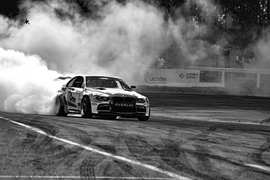
However, the ZL1’s performance credentials extend far beyond its impressive acceleration figures. Chevrolet equipped the car with a sophisticated Magnetic Ride suspension system that reads the road surface 1,000 times per second, adjusting damping forces to optimize grip and handling. Sticky Goodyear Eagle F1 Supercar tires provide a tenacious connection to the pavement, while an electronic limited-slip differential ensures that power is distributed efficiently to maximize traction. High-performance Brembo brakes provide stopping power commensurate with the car’s acceleration capabilities. This comprehensive engineering package resulted in a car that contemporary reviewers routinely compared to luxury sports coupes from BMW and Mercedes-Benz, proving that American muscle could deliver world-class refinement and performance.
Cadillac CT5-V Blackwing — 668 hp
Cadillac
Leveraging the engineering prowess developed for the Camaro ZL1, General Motors bestowed its supercharged 6.2-liter LT4 V8 upon Cadillac’s flagship sedan, the CT5-V Blackwing. This powertrain transplant, first seen in the 2015 Corvette Z06, was further refined for the Blackwing, resulting in an output of 668 hp and 659 lb-ft of torque. This made the CT5-V Blackwing the most powerful production Cadillac ever conceived, marking a significant moment in the luxury marque’s performance history.
The Blackwing’s performance figures are nothing short of extraordinary for a four-door sedan. Cadillac claims a 0-60 mph time of 3.4 seconds and a quarter-mile elapsed time of 11.3 seconds, benchmarks that rival high-performance sports cars from around the world. These numbers were independently verified, with automotive publications confirming the car’s blistering acceleration capabilities. The LT4 engine’s intoxicating supercharger whine and relentless surge of power deliver a driving experience that is both exhilarating and refined, a hallmark of Cadillac’s performance division.
Beyond its straight-line prowess, the CT5-V Blackwing is engineered to excel in dynamic driving environments. Cadillac equipped the car with a Magnetic Ride suspension system, carbon ceramic brakes, and an electronic limited-slip differential, creating a sophisticated handling package that belies the car’s substantial mass. To underscore this capability, Cadillac Arabia invited F1 Academy driver Amna Al Qubaisi to pilot the Blackwing around the legendary Yas Marina Circuit in Abu Dhabi. The resulting lap time of 2:20.98 set a new benchmark for production sedans, a testament to the car’s engineering excellence. As Cadillac continues its transition toward electrification, the CT5-V Blackwing stands as a powerful symbol of the brand’s performance heritage, a refined yet ferocious muscle sedan that will be remembered for its groundbreaking achievements.
Chevrolet Corvette Z06 (C8) — 670 hp
Chevrolet
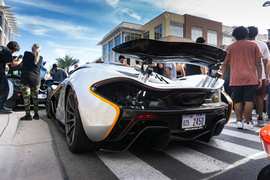
The eighth-generation Chevrolet Corvette represents a paradigm shift in the model’s storied history, marking its transition from a front-engine American icon to a mid-engine supercar rivaling the likes of Ferrari and Lamborghini. While this radical redesign fundamentally altered the Corvette’s character, it did not diminish its performance credentials. In fact, Chevrolet doubled down on performance with the introduction of the Z06 variant for the 2023 model year, creating a track-focused machine that pushed