



The Road Not Taken: Why the Afeela 1 Electric Sedan’s Cancellation Signals a New Era for EV Development
The automotive landscape, particularly within the electric vehicle (EV) segment, is a volatile and ever-evolving frontier. As an industry veteran with a decade embedded in this transformation, I’ve witnessed countless ambitious projects rise and fall, each serving as a critical lesson in the complexities of innovation, market timing, and strategic execution. The recent announcement by Sony Honda Mobility (SHM) to discontinue the development of the Afeela 1 electric sedan is precisely one such pivotal moment, underscoring fundamental shifts in the global EV market that demand closer examination.
Initially heralded as a bold fusion of tech and automotive prowess, the Afeela 1 electric sedan aimed to redefine the driving experience. Its cancellation, following Honda’s broader re-evaluation of its electric vehicle investment and manufacturing strategies in the United States, isn’t merely the end of a single model; it’s a bellwether for the intense pressures facing the premium EV market, the intricate dance of automotive joint ventures, and the sobering realities of bringing a software-defined vehicle to scale. This decision offers a fascinating, albeit sobering, case study into the strategic hurdles and financial demands that define success—and failure—in the race for next-generation mobility.
The Vision: A Converged Future for the Afeela 1 Electric Sedan
The genesis of Sony Honda Mobility was rooted in an undeniably compelling premise: to merge Sony’s deep expertise in entertainment, sensors, and software with Honda’s century-plus legacy in automotive engineering and manufacturing. This collaboration was designed to birth vehicles that transcended traditional transportation, offering an immersive, connected, and ultimately, a software-defined experience. The Afeela 1 electric sedan, first unveiled in prototype form at CES 2023 and later as its production-spec iteration at CES 2025, was to be the vanguard of this vision.
The pitch was captivating. The Afeela 1 promised not just an electric powertrain but an ecosystem on wheels. Emphasis was placed heavily on its advanced driver-assistance systems (ADAS), its powerful onboard computing, and the seamless integration of digital entertainment and personalized experiences. For consumers in markets like California, where tech adoption and environmental consciousness converge, the initial appeal of a vehicle promising cutting-edge autonomous driving systems and high-end infotainment was palpable. This was more than just another luxury EV; it was touted as a new paradigm in automotive technology integration, designed to appeal to early adopters keen on the future of automotive.
The joint venture aimed for an initial launch in 2026, targeting North American consumers first, with California specifically mentioned as a primary market. This strategic choice highlighted the ambition to capture a demographic ripe for disruption, valuing innovation over pure horsepower. The Afeela 1 electric sedan wasn’t just a car; it was a statement about the future of transportation, positioned at the intersection of Silicon Valley’s digital dreams and Detroit’s manufacturing might. Its narrative was compelling, promising to leverage strengths from both parent companies to carve out a unique niche in the burgeoning EV market.
Unpacking the “Why”: Honda’s Strategic Re-evaluation and Market Realities
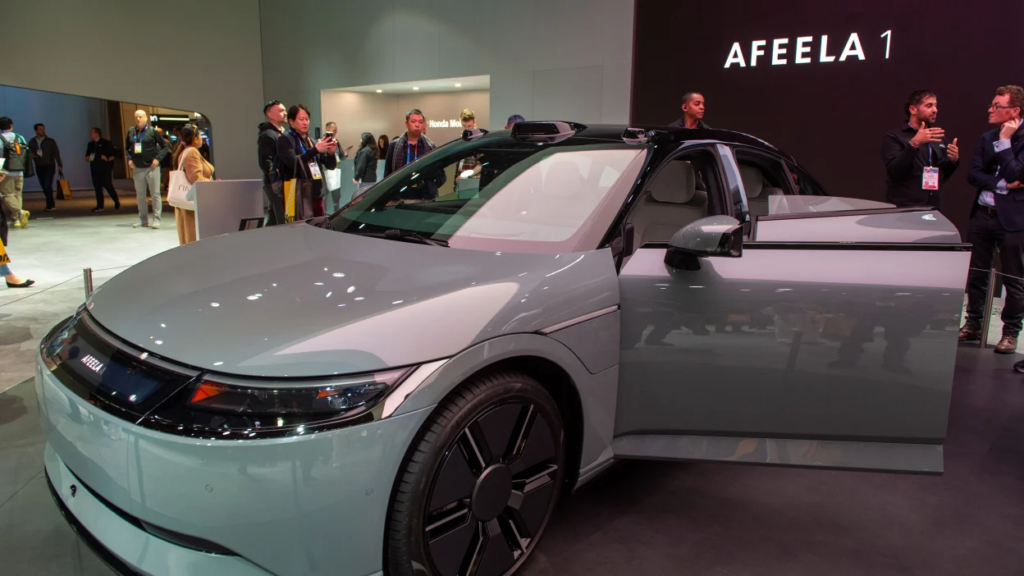
The abrupt cessation of the Afeela 1 electric sedan project can be directly traced to a broader strategic pivot by Honda. Earlier this year, Honda announced the cancellation of plans to build three new EV models on an all-new platform in the United States. This decision sent immediate ripples through the industry, and it became clear that such a fundamental shift would inevitably impact SHM. Honda’s rationale was rooted in a critical re-evaluation of its electric vehicle development roadmap, acknowledging the formidable challenges of scaling EV production, managing supply chains, and achieving profitability in a fiercely competitive landscape.
Honda’s decision to backtrack meant that SHM would no longer have access to “certain technologies and assets that were originally planned to be provided by Honda.” This revelation is crucial. It suggests that a significant portion of the Afeela 1’s underpinnings, likely including the core electric vehicle platform, battery technology, and possibly manufacturing capabilities, were contingent on Honda’s existing or planned EV infrastructure. Without this foundational support, Sony Honda Mobility determined it “does not have a viable path forward to bring the Models to market as originally planned.” This highlights the immense capital outlay and complex dependencies involved in modern EV development.
The broader market context cannot be overstated. While the EV market continues its growth trajectory globally, the pace has diversified. Different regions and segments are experiencing varying levels of adoption and demand. In some premium segments, the initial rush has somewhat plateaued, with consumers becoming more discerning about range, charging infrastructure, price, and overall value proposition. Intense competition from established luxury brands and agile newcomers, coupled with ongoing macroeconomic headwinds, has forced many automakers to scrutinize their electric vehicle investment strategies more closely. Honda’s pivot reflects a pragmatic assessment of these realities, prioritizing long-term sustainability over an accelerated, potentially unsustainable, EV rollout. The company has since indicated a renewed focus on hybrid models as a bridge technology and a more targeted, potentially collaborative, approach to its all-electric future, including existing partnerships with General Motors. This recalibration underscores the volatile nature of the future of automotive and the need for adaptable strategies.
The Afeela 1 Electric Sedan: A Product Under Scrutiny
Beyond the macro-economic and strategic forces at play, the Afeela 1 electric sedan itself faced significant hurdles in establishing a compelling market position. While the software and connectivity aspects were touted as revolutionary, the core vehicle specifications, once revealed, were met with a mixed reception, particularly given its ambitious pricing.
The promised dual-motor powertrain, expected to deliver “over 400 horsepower,” was respectable but hardly groundbreaking in the luxury EV market. Many competitors already offered similar or superior performance figures. More critically, the estimated range of “around 300 miles” was a significant point of contention. While adequate for many, it fell short of the class-leading figures offered by rivals, especially considering the rapid advancements in battery technology. For a vehicle aiming for a premium position, range anxiety remains a powerful psychological barrier, and a middling figure at a high price point was always going to be a tough sell.
And then there was the price tag: a starting price of $89,900 for the base Origin trim, soaring to $102,900 for the Signature trim. In a market where luxury electric sedans like the Tesla Model S, Mercedes-Benz EQE, and Lucid Air offer compelling packages, often with greater range or more distinctive performance, the Afeela 1 electric sedan struggled to articulate its unique value proposition beyond its software layers. The vehicle’s aesthetic, famously described as looking “like it was designed to be in the background of a video game,” also failed to ignite widespread enthusiasm. While design is subjective, blandness in a premium segment is often a death knell. Consumers paying top dollar expect a distinctive visual identity that complements cutting-edge technology.
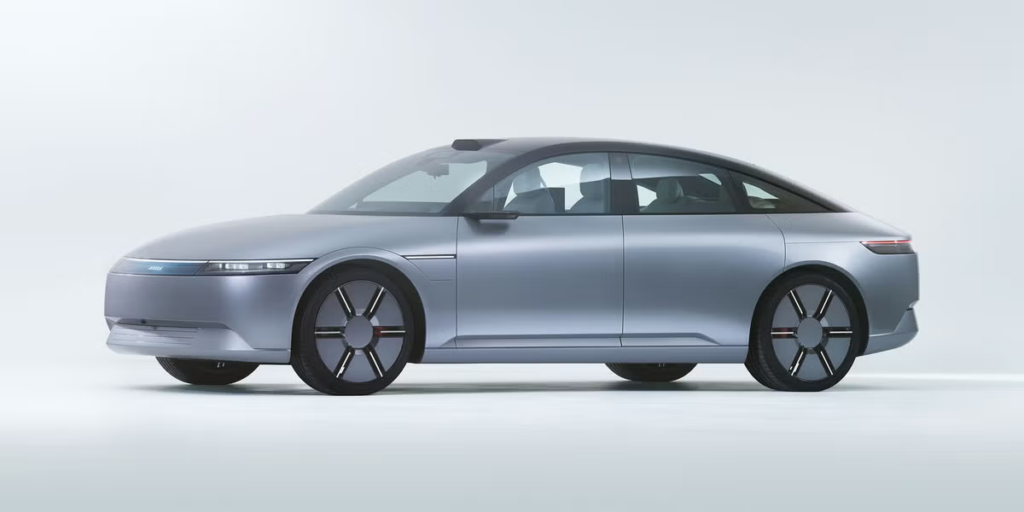
The challenge for SHM was to convince buyers that its software-defined vehicle capabilities, sophisticated advanced driver-assistance systems (ADAS), and advanced connected car technology were enough to justify the price and overcome perceptions of average performance and conservative styling. In hindsight, it appears the market wasn’t ready to fully embrace a paradigm where the digital experience alone commanded such a premium without a more robust, exciting, or groundbreaking physical package. The promise of the Afeela 1 electric sedan was tantalizing, but its execution faced an uphill battle against established automotive prowess and rapidly evolving consumer expectations in the premium EV market.
Broader Implications for the EV Landscape and Automotive Collaboration
The discontinuation of the Afeela 1 electric sedan sends a powerful message across the entire automotive industry, particularly to other technology companies contemplating deep dives into vehicle manufacturing. It serves as a stark reminder of the monumental capital, specialized expertise, and relentless execution required to succeed in the auto sector. The venture between Sony and Honda, two behemoths in their respective fields, highlights the inherent difficulties of cross-industry joint ventures, especially when one partner’s core strategic direction shifts.
This event also provides a critical reality check for the narrative around sustainable mobility solutions. While the drive towards electrification is undeniable, the path is fraught with economic and logistical challenges. It’s not simply about building an EV; it’s about building an EV that is desirable, competitive, profitable, and can be manufactured at scale. The fate of the Afeela 1 electric sedan is a case in point, reinforcing that market viability, not just technological ambition, dictates outcomes. The cancellation of the proposed Afeela SUV, which was due out in 2028, further underscores this point, indicating a complete re-evaluation of the entire product roadmap.
For the wider EV market, this signals a period of consolidation and strategic realignment. We may see fewer ambitious, standalone projects and more focused collaborations or acquisitions as automakers seek to pool resources and mitigate risk. The lessons learned from ventures like SHM will undoubtedly influence future partnerships, emphasizing the need for robust, long-term commitment from all parties, especially concerning core assets and technologies. From a local perspective, the implications for potential manufacturing hubs in the United States, such as those in Ohio where Honda has a significant presence, suggest that job creation and electric vehicle investment will be increasingly tied to viable, scaled production plans rather than experimental ventures. The ripple effect extends to the entire supply chain, from battery technology providers to component manufacturers, all of whom must navigate this shifting landscape.
The ambition for autonomous driving systems and sophisticated advanced driver-assistance systems (ADAS) remains, but the platform on which these technologies are delivered must be compelling and sustainable. The journey to the true “software-defined vehicle” is complex, requiring not only technological brilliance but also a deep understanding of manufacturing efficiencies, consumer psychology, and market dynamics.
The Future of Sony Honda Mobility: A Glimmer of Hope or a Full Stop?
In its official statement, Sony Honda Mobility indicated that it “will continue discussions with Sony and Honda regarding its future business plans.” While this leaves a crack open for future endeavors, the complete refund of reservation fees for the Afeela 1 electric sedan suggests that any immediate product launch is highly unlikely. What, then, could these future business plans entail?
One possibility is a shift in focus from full vehicle manufacturing to technology licensing or development for other automakers. Sony’s strengths in sensors, AI, entertainment, and digital ecosystems could still be immensely valuable to the industry without the burden of developing and manufacturing an entire vehicle. Honda, having re-calibrated its own EV strategy, might be more amenable to a partnership where SHM develops specific software modules, user interfaces, or entertainment platforms that could be integrated into Honda’s broader EV lineup. This could represent a more financially prudent approach to automotive technology integration, leveraging Sony’s unique capabilities without the capital expenditure risks of producing a full vehicle.
Alternatively, the venture could morph into a research and development hub, exploring next-generation mobility concepts, connected car technology, or sustainable mobility solutions that don’t immediately translate into a specific vehicle model. This allows both companies to maintain a presence in the cutting-edge aspects of EV development without committing to an ultimately unviable product. The market for EV charging infrastructure, for instance, remains ripe for innovation, and Sony’s tech prowess combined with Honda’s engineering could find new avenues there. The experience with the Afeela 1 electric sedan, despite its cancellation, has undoubtedly generated invaluable data and insights into the practicalities of melding tech and auto.
Conclusion: A Cautionary Tale, a Resilient Industry
The cancellation of the Afeela 1 electric sedan serves as a potent reminder of the high stakes and inherent complexities within the rapidly evolving EV market. It underscores that even the most innovative partnerships, backed by industry giants, are not immune to strategic re-evaluations, market forces, and the sheer financial demands of bringing a competitive product to fruition. The dream of a seamless, software-defined vehicle remains tantalizing, but the path to mass-market adoption requires a delicate balance of cutting-edge technology, compelling design, competitive pricing, and a robust manufacturing infrastructure.
As an industry expert, I see this not as a setback for electrification, but as a critical learning moment. It highlights the importance of adaptability, rigorous market analysis, and disciplined electric vehicle investment. The automotive sector is notoriously difficult to disrupt, and the fusion of tech and auto, while inevitable, is proving to be a more nuanced and challenging endeavor than many initially predicted. The future of automotive will undoubtedly be electric, connected, and increasingly autonomous, but the players and products that succeed will be those that can navigate these turbulent waters with strategic foresight and unwavering commitment to sustained viability.
Are you navigating the complexities of the evolving EV landscape, or seeking to understand the strategic implications of market shifts for your business? Connect with our team of automotive industry experts today to discuss how these trends impact your operations and future planning, and discover tailored insights to drive your next strategic move.